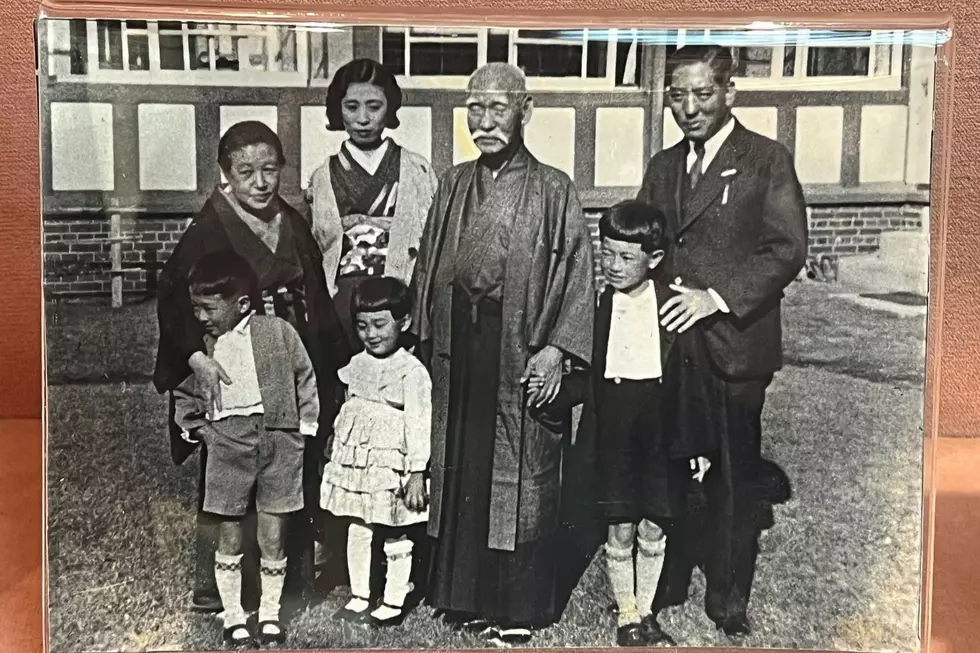
Fairhaven Took In a Teenage Castaway Who Became America’s First Japanese Resident
Long before Fairhaven had a sister city in Japan, it had a teenage castaway named Manjiro. His story changed history on both sides of the Pacific.
Rescued at Sea
In 1841, Manjiro Nakahama was just 14 when a storm wrecked his fishing boat and stranded him on a remote Pacific island. Captain William H. Whitfield and the crew of the Fairhaven whaleship John Howland rescued him. Instead of returning to Japan, Manjiro asked to stay with the captain, and in May 1843 he stepped ashore in Fairhaven. Whitfield raised the boy as his son until he sailed back to Japan when he turned 18.
The First Japanese Person to Live in America
Manjiro is widely recognized as the first Japanese person to live in the United States, at a time when Japan was closed to the outside world. Manjiro focused on math and navigation for his studies here in Fairhaven. Locals called the boy John Mung; however, according to discoverfairhaven.org, Manjiro was not welcomed with open arms by everyone.
"Though most of Manjiro’s schoolmates accepted him, some of their parents were not as welcoming. When Capt. Whitfield took Manjiro with him to the Congregational Church, he was told the boy would have to sit in the 'negro pew.' Whitfield left the church and took his family to the original Unitarian Church where Manjiro was allowed to sit with the Whitfields," according to the site.
How Manjiro Brought the Necktie to Japan
When Manjiro later returned home to Japan, he was honored with the title of a samurai and served as an English interpreter. Timing was on his side, as Japan was in the middle of opening up to the West. How much of an influencer was Manjiro? He is credited with introducing the necktie to the people of Japan.
The FDR Connection
By pure coincidence, Warren Delano of Fairhaven, grandfather of President Franklin D. Roosevelt, was part owner of the John Howland ship. In 1933, FDR wrote a letter to Manjiro's son, proudly noting that his grandfather had owned part of the ship that rescued Manjiro and brought him to Fairhaven.
What Happened to Fairhaven's Samurai Sword?
On July 4, 1918, Japanese Ambassador Viscount Ishii presented Fairhaven with a samurai sword, a meaningful gift from Manjiro's son, Dr. Toichiro Nakahama. Unfortunately, the sword was stolen in 1977 and was never recovered.
Years later, Dr. Tadashi Kikuoka of Seton Hall University heard about the theft of the sword and spearheaded a campaign to raise money for a replacement. The cherished samurai sword was presented to the town on June 12, 1982. Its blade may date back to the 15th century, and to this day it is on display at the Millicent Library in Fairhaven.
A Royal Welcome in Fairhaven
On October 4, 1987, Crown Prince Akihito and Princess Michiko visited Fairhaven, and about 1,500 people lined the streets to greet them. "Fairhaven is an everlasting symbol of the good will and friendship between the Japanese and American people," the future emperor said.
The Whitfield Manjiro Friendship House
On December 2, 1987, Fairhaven officially became a sister city of Manjiro's hometown, Tosashimizu. Today, Whitfield's home at 11 Cherry Street is the Whitfield Manjiro Friendship House museum. A tour allows you to see the very home which helped build a bridge between Japan and the United States.
Manjiro Nakahama Photos
Gallery Credit: Michael Rock
The Craziest Pickle Treats at Mohegan Sun's Ultimate Pickle Experience
Gallery Credit: Michaela Johnson
More From WFHN-FM/FUN 107