The Surprising Secret Weapon Against Spotted Lanternflies: Your Own Backyard Dog
Dogs help people detect all kinds of things thanks to an olfactory system that is far more sensitive than ours. They can be trained to alert us to termites and bed bugs, find highly sought-after truffles, and locate lost items. Now, dogs are even helping people find the egg masses of an invasive insect that has been making headlines.
Researchers at Virginia Tech first suggested that dogs can successfully find the egg masses of the spotted lanternfly (Lycorma delicatula) in their study published last year. The follow-up study, published in June 2026, showed that dogs can detect spotted lanternfly (SLF) egg masses in areas where their presence is unknown, and they outperformed people in visually complex environments.
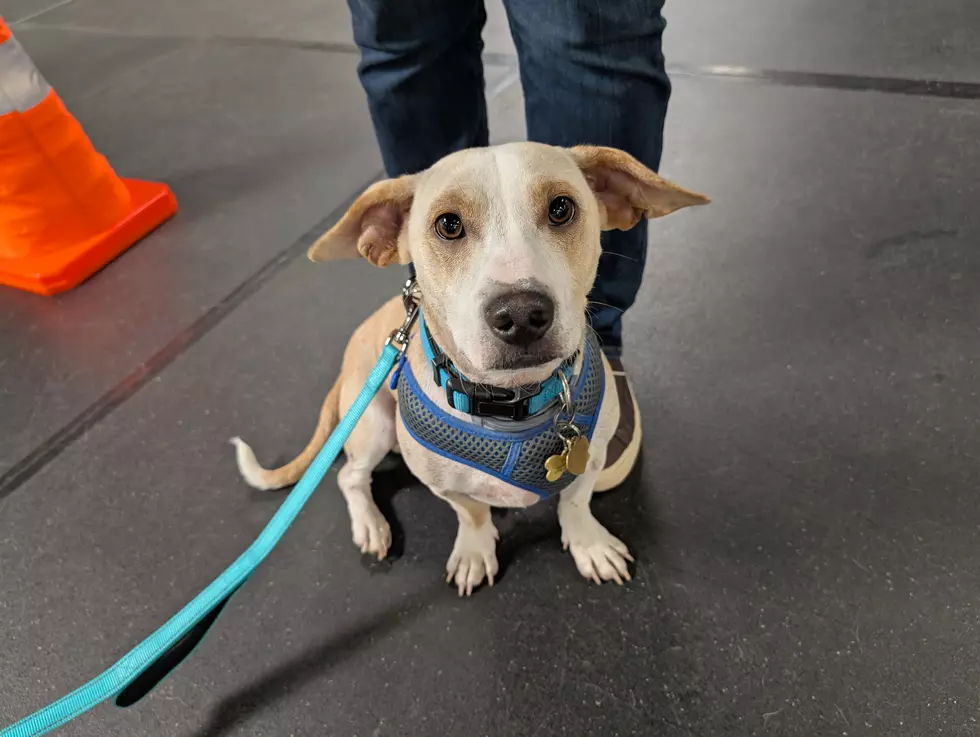
One thing that makes the study especially interesting is that the dogs involved were not professional detection dogs. Instead, the dogs were companion dogs whose owners had trained them in scent detection using other odors.
One of the researchers and authors of the study, Dr. Sally Dickinson, explained that dogs learn to find the egg masses after pairing the scent of devitalized eggs with something that motivates them.
“It might be a toy, food, or petting and attention from the handler,” Dickinson said. Once the dog associates the target odor with something worth working for, the odor becomes valuable enough for the dog to want to find. “Then we teach them to discriminate the target (egg masses) from other odors by only providing the reinforcer for the target.”
Using devitalized, or inactivated, eggs allows handlers to train their dogs on the same scent as live eggs without the risk of transporting or releasing SLF into the environment. In 2014, the SLF was discovered in Pennsylvania, and it has since spread to many states, including Massachusetts. The insect is a planthopper native to parts of Asia that damages plants.
Understanding the Spotted Lanternfly Threat
“They have straw-like, piercing, sucking mouthparts,” said Dr. Pat Wooden, Insect Identification Laboratory Manager at Virginia Tech. “So they’re actually using their beak to tap into the plant, and then sucking all the nutrition from it. When they leave, the plant has a hole, which can lead to disease, drying out, and other secondary effects.”
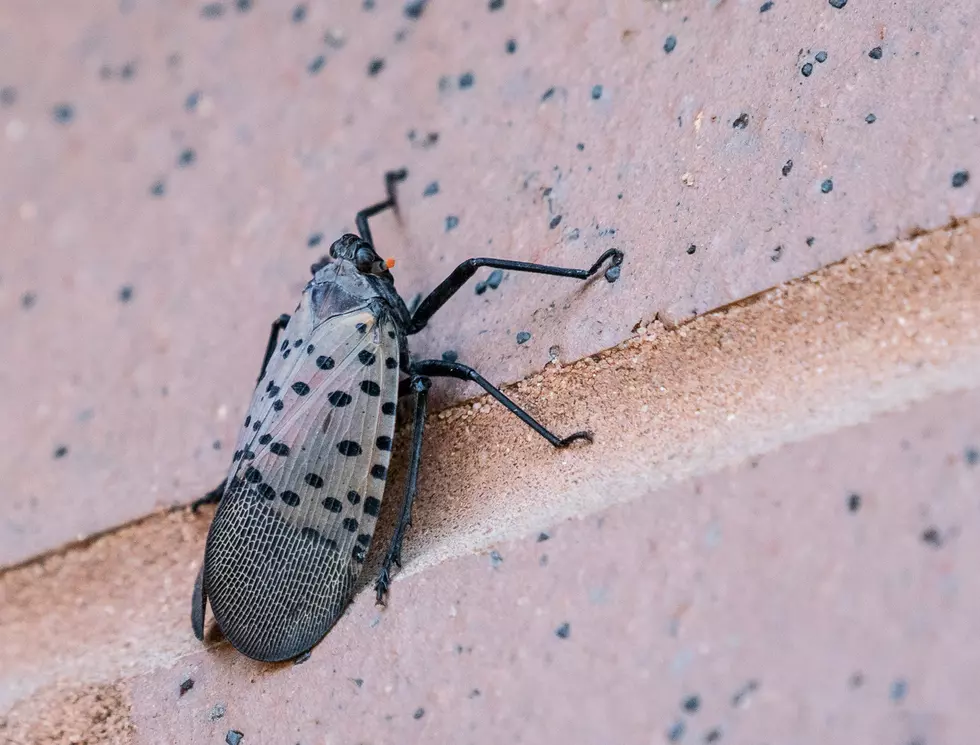
Wooden explained that the SLF prefers the tree-of-heaven, but they are learning to eat other things. “We worry about grapevines,” Wooden said. Although the planthoppers aren’t poisonous, predators are cautious because of the bright red hindwings and fast movement of the adults. While it’s taking some time, Wooden explained that some animals are starting to learn they can eat the SLF.
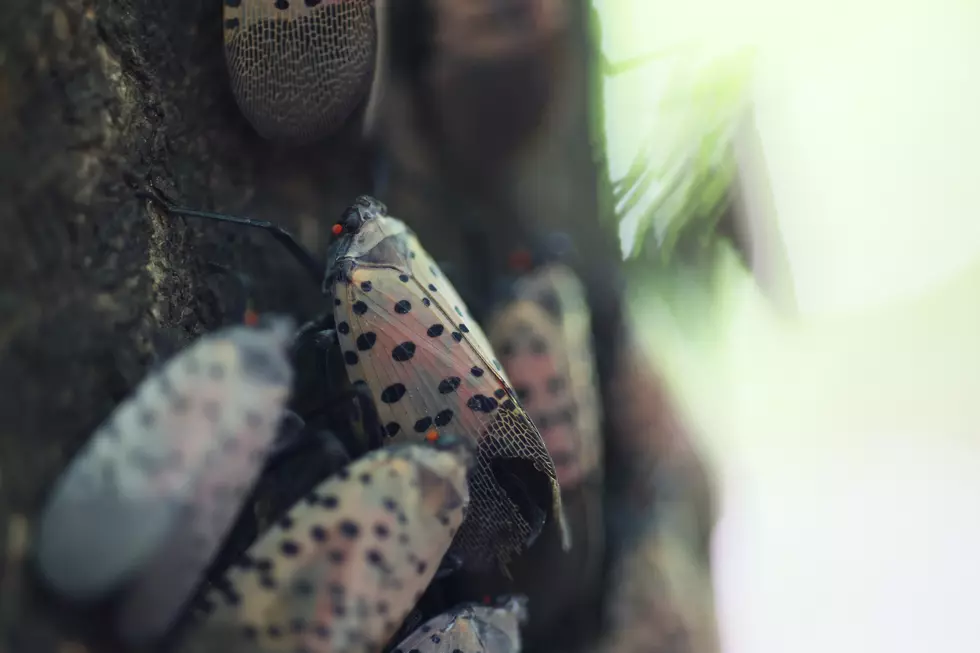
Adult SLF are around one inch. Even at rest with their wings closed, their size and the fact that they are found in groups make them easy to notice. What’s not easy to find are the egg masses left behind by the SLF.

The egg masses contain about 30 to 50 eggs and are covered in a grey material that blends into cement and bark, explained Dr. Erica Feuerbacher, the study’s lead researcher and professor in the School of Animal Sciencesd.
In the first proof-of-concept study to see whether community scientists and their companion dogs could detect the egg masses, the dogs and their owners were found through Facebook posts. The posts specified that the dogs should have scent-detection experience.
Scent Training for Dogs
Many training schools offer scent training classes. Some people participate for fun; others compete to earn titles. In scent training, dogs learn to find target odors hidden in containers, indoor search areas, and outdoor search areas. Most pet dogs respond well to scent training. They even learn to ignore distractions while searching for the target odors. Once a dog finds the odor, the handler calls an alert. Some dogs let their handler know in very obvious ways, such as staring at it and refusing to move away until the handler acknowledges the dog. Other dogs are more subtle.
READ MORE: Scent Work for Dogs: Games, Tips, and Mental Enrichment
The idea behind the study was that pet dogs can learn to find SLF egg masses just like they do other odors in sports, without the expense of detection dogs selected specifically for the job and professionally trained. The success of both the proof-of-concept study and the more recent one demonstrating real-world success points to a scalable way for people and community dogs to help control the SLF.
Outperforming Humans in Complex Terrain
The dogs in the second study showed that when people can’t see egg masses, dogs can sometimes still detect them. “Sally was running this assessment, and one of the dogs kept alerting on a tree,” Feuerbacher said. “She scrambled up like 10 or 20 feet up in the tree, and then found the egg mass that was tucked in a crevice up there.”
While Feuerbacher explained that the odor of the egg masses is subtle, and dogs tend to do best when searching close to where the egg masses are, the study helped determine the best way dogs and handlers should move through search areas to be successful.
The success of companion dogs learning to detect SLF egg masses might be just the start. “We’re looking at a new target called Pierce’s disease, which is a bacterial infection,” Feuerbacher said. “It infects trees, so our forests are at risk, as well as grapevines.”
To learn about the spotted lanternfly in Massachusetts, including what to do if you find them, you can visit the Massachusetts Department of Agriculture Resources.
Melissa Viera is the owner of MJ's Pet Training Academy in Acushnet.
LOOK: 20 of the biggest insects in the world
Gallery Credit: Andrea Vale
Quiz: Do you know your state insect?
Gallery Credit: Andrew Vale
More From WFHN-FM/FUN 107