
New Bedford WWII Ranger Identified After 82 Years, Returning Home for Burial
U.S. Army Pfc. William A. Gervais, Jr. of New Bedford went missing in action in Germany during World War II in December 1944. His remains were identified in June 2026. Pfc. Gervais is coming home after 82 years.
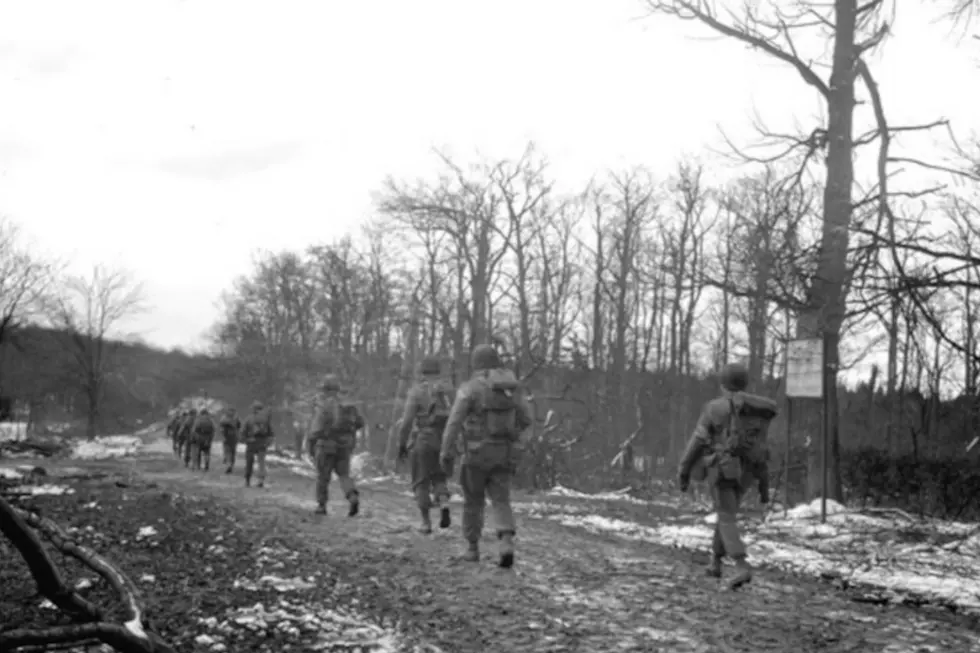
Disappearance at Hill 400 in the Hürtgen Forest
The U.S. War Department's Defense POW/MIA Accounting Agency said, "Gervais was assigned to Company F, 2nd Ranger Battalion. On December 7, the unit was part of the effort to take Hill 400 near Bergstein, Germany, in the Hürtgen Forest."
"Soon after successfully taking the hill, the battalion had to defend against the German counterattack," the DPAA said in a press statement. "During the fighting, Gervais and another soldier were instructed to make contact with another platoon on a different part of the hill."
"They never made it to the platoon," the DPAA said. "Due to continuous artillery fire and the threat of additional German attacks, the battalion could not search for Gervais. He was listed as missing in action."
New Bedford Roots and Pre-War Life
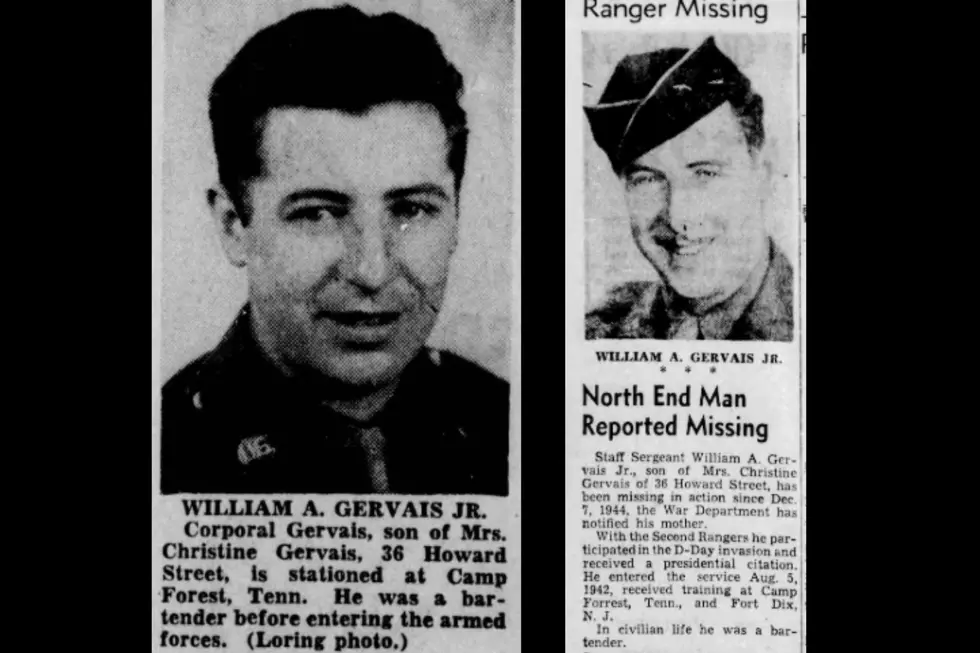
A press clipping that accompanied the DPAA statement indicates that Gervais, who was 28 years old at the time of his disappearance, was the son of Mrs. Christine Gervais of 36 Howard Street in New Bedford. Before joining the armed forces, he worked as a bartender. Gervais was stationed at Camp Forest in Tennessee before shipping out.

Funeral Arrangements and Walls of the Missing Honor
The Saunders-Dwyer New Bedford Home for Funerals is coordinating local arrangements. Gervais will be laid to rest with full military honors on Monday, December 7, 2026, at the Massachusetts National Cemetery in Bourne.
Gervais's name is listed on the Walls of the Missing at the Netherlands American Cemetery in Margraten, Netherlands. The American Battle Monuments Commission will place a rosette next to his name to indicate that he has been identified.
LOOK: 100 years of American military history
LOOK: 20 photos of shipwrecks from WWI and WWII
Gallery Credit: Elias Sorich
More From WFHN-FM/FUN 107